

News & Events
WGSS Statement on Kamala Harris, Vice President-Elect
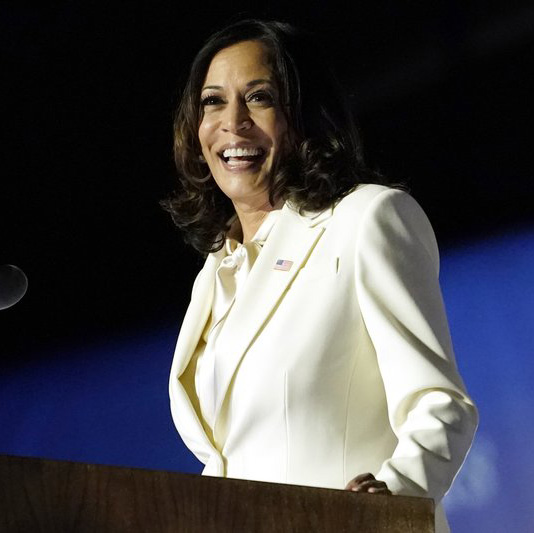
The election of Kamala Harris as Vice President of the United States has made history and broken many barriers that have been in place since the founding of our nation: she is the first woman, the first Black person, the first person of South Asian descent, the first child of immigrants, and the first biracial person to be elected to the Vice Presidency. In her acceptance speech, Kamala acknowledged the firsts of her election, saying “While I may be the first woman in this office, I will not be the last, because every little girl watching tonight sees that this is a country of possibilities.”
In her acceptance speech, Kamala recognized that she stood “on the shoulders of all the women who worked to secure and protect the right to vote;” it is crucial at this point to remember that she was elected on a wave of anti-racist and feminist social movement power. For many of us, Kamala Harris embodies the promise of social justice, and we, the members of the Women’s, Gender, and Sexuality Studies Department at Rutgers University, acknowledge and celebrate this historic moment and this historic election.
We also acknowledge and celebrate, and express our deepest gratitude for, the organizing work carried out by Black women across this country, including Stacy Abrams and her supporters in Georgia; for the Native American organizers who were instrumental in changing the vote in Arizona; for the supporters of Ilhan Omar and Rashida Tlaib who brought out hundreds of thousands of voters in Michigan and Minnesota; and for all of the voters who came to the polls, many for the first time, to bring about this historic moment.
We urge Vice President-Elect Harris and all of those elected to continue to work for social justice, to stay in dialogue with and to remain accountable to the social movements, organizers and voters who propelled them and the Democratic ticket to power, and, in particular, to listen to voters and activists protesting for Black Lives Matter and against police brutality.
These elections changed the course of history because of the grassroots organizing work, the votes, and the activism of Black, Muslim and Indigenous women, members of LGBTQ communities, and communities of color across the country. We celebrate the organizing, the protests, and the hard work of everyone who made this history-making possible. Our community of feminists: scholars, activists, teachers, and artists; of bipoc, queer, first-generation women and non-binary folks; of people from New Jersey and across the world, will continue our 50-year-long history of speaking truth to power, working for justice, and creating knowledge for everyone. We will work for justice, teach for equality, and read and write in order to build new worlds. We hope that our leaders will work alongside us, alongside activists, protestors, and organizers, to make this moment part of a larger wave of lasting change for all. Let’s continue to make history, and to dream and work to make the world a place where security is not carceral and justice is for everyone!
Dr. Ethel Brooks
Chair and Graduate Program Director
Department of Women’s, Gender, and Sexuality Studies
WGSS Stands in Solidarity for Justice

In the wake of the killings of George Floyd, Breonna Taylor, and Ahmaud Arbery, we, the Department of Women’s, Gender, and Sexuality Studies at Rutgers University--New Brunswick affirm the following:
We support the worldwide protests against police brutality and the white supremacist state. We want to take part in making the future better for everyone, particularly Black people who have been marked as subjects and targets of police violence and state-sanctioned racism throughout the history of the United States.
People like us, across the world, should be stepping up to lead, to listen, to teach, and to learn at this moment. We toil and struggle as minorities who never should have been in the academy, and we use our privilege as educators and writers, as scholars and activists, to produce new ways of understanding, to dismantle racism, patriarchy, homophobia, and classism, and to combat violence and brutality in all of its forms. We do this, but the current moment teaches us that we need to do it better. We need to be stronger, more stalwart in our activism, in our support, in our solidarity, and in our anti-racism. We can work harder alongside those who are on the front lines every day who are fighting for the betterment of our world. We must fight for a world where every precious body feels secure, where police brutality and anti-Blackness are no longer acceptable, and where everyone has a possibility of a future where our lives are recognized, our humanity is sustained, and our communities are supported.
Black Lives Matter. We affirm the life, the community, and the humanity of Black people and of all people of color worldwide. White supremacy, patriarchy, capitalism, and colonialism have continually called into question the value and meaning of Black life in this country. Black people’s lives, histories, families, communities, knowledge, and contributions have been subject to the brutality, violence, and everyday racism that marks our country. The continual murders of Black people haven’t intensified in recent years; it was nearly thirty years ago that the beating of Rodney King was caught on video, thirty years since Eleanor Bumpurs was killed by police in her own home, and in those thirty years, the videos have multiplied and yet we seek justice. Black lives cannot continue to be sacrificed to the police regime. We can no longer allow this historically racist, flawed institution to wield control over our country’s people of color --we will fight tirelessly against this reign of brutality.
We remember those who have been murdered, we mourn them, and we stand with their loved ones and neighbors in marking this immense loss to our world and our future.
We are a community of multiply-marginalized scholars and activists. As Black, indigenous, people of color, nonbinary folks, women and queer people, in this critical moment, we are working to listen, to lead, to question, and to fight. Our field grew out of a social movement, and our research, writing, and teaching are all in service of creating a more just world. Our department is home to the Social Justice minor, and we teach, research and struggle for social justice both inside and outside of the academy. We hope to model activism and solidarity for everyone who is fighting to make this world a better place through protest, organizing, writing, and producing knowledge in all of its forms.
Black students, faculty, and staff across the University who are experiencing grief, fear, loss, anger, and frustration during this time: our department is here for you. We stand with you in this fight, and we offer you all of our love and solidarity. Whatever you need from us, you have our emails, phone numbers, and social media accounts; please contact us if you are in search of support. Nobody should have to endure this burden alone.
With love.
#BlackLivesMatter
A Welcome Letter from WGSS Department Chair, Dr. Ethel Brooks

September 8, 2020
Dear WGSS community,
As we begin this new year full of promise and uncertainty, I want to extend a warm welcome to the new members of our community and to those who are returning. We are celebrating more than 50 years of WGSS at Rutgers, 20 years of being a department, and 20 years as a PhD program. This year has brought us challenges, difficulties and possibilities that were unimaginable fifty or 20 years ago, or even one year ago, and through it all, we have continued the crucial work of our collective project: through teaching, activism, program-building, research, writing, and providing vision, dedication and care, we have maintained and grown our intersectional feminist mission to interrogate power and work for social justice.
As I wrote in my first letter to the faculty, I come to you as a working-class Romani woman, a first-generation high-school graduate, college student and PhD. I am the only tenured Romani woman professor in the world, and I joined our department because I wanted to build this with all of you, as a project of knowledge production, teaching and activism. I have been part of this department for two decades and I have seen the deep commitments that all of us have, the hard work and brilliance that we put into our teaching, our scholarship and our service. I want to work with you, with our colleagues from other departments and with our union–to resist retrenchment and to counter the violence with a politics of love, of solidarity, of labor, of resistance and of struggle. It is only in this way that we can reconfigure the racialized, classed and gendered effects and policies that mark this moment of crisis.
We can build together, and I am asking all of you to step forward as feminists to lead, to work and to build together. As Chair, I promise you my commitment, my work and my solidarity; I ask for yours in return. Thank you for all that you have done, for all that you do, and for all that you will do. Your commitment and your work to make the world a better place despite all the uncertainty is an inspiration.
I especially want to thank our amazing WGSS staff members –Monique Gregory, Feronda Orders and Colleen Lord—who have carried the work of our department and our mission in truly heroic ways in the face of immense challenges. Their dedication, expertise, skill, long hours and cheerful demeanor have kept all of us going even when it seemed like it would not be possible to continue and to build our work when the world shut down. The staff has been working remotely, have been furloughed, and have worked harder and above and beyond during these unprecedented times, from scheduling, budgets, emergency graduate funds, technological support to faculty and students, and any other short-turnaround request from the department, school and university. They have done it with good grace and generosity. You can feel free to give them a shout-out, in person, over email and through the new SAS Staff Recognition Portal, which can be found at https://ooa.sas.rutgers.edu/.
Even as we begin the semester remotely, in the context of the current challenges we face, this is an exciting time for our department. We have a new name: we are officially the Department of Women’s, Gender and Sexuality Studies. We have new leadership: Kyla Schuller is our Undergraduate Program Director and I am Chair and acting Graduate Program Director. I want to extend my deepest thanks and appreciation to our outgoing Chair, Mary Trigg, our outgoing Undergraduate Director, Yana Rodgers, and our outgoing Graduate Director, Jasbir Puar, for their dedicated years of service and leadership in our department –which became especially challenging these past few months. I also want to congratulate the first Chair of our Department and former Dean of Douglass, Harriet Davidson, on her retirement, and to thank her for her many decades of feminist scholarship, teaching and service to our program, our department and our university.
I am thrilled to announce that we have a new faculty colleague and a new ACLS Emerging Voices Fellow joining us this year. I want to welcome our new colleague, Asli Zengin, who joins us from Brown, where she was the Louise Lamphere Visiting Assistant Professor of Anthropology and Gender Studies in the Department of Anthropology and the Pembroke Center. Before joining Brown, Asli was a postdoctoral fellow in the Women’s Studies in Religion Program at Harvard Divinity School and the Women’s, Gender and Sexuality Studies Program at Brandeis University. Asli’s work explores the relationship between death, sovereignty, and gendered belonging by focusing on Sunni Muslim transgender people’s deaths, their funeral ceremonies, and burial and mourning practices in Turkey. Specifically, it examines how transgender deaths mark the gendered and sexual limits of belonging in regimes of Islam, family, kinship, and citizenship, and in practices of mourning and grief.
I also would like you to join me in welcoming Evelyn Autry Saavedra, who comes to us as an ACLS Emerging Voices fellow with a Ph.D. in Hispanic Studies from the University of Georgia. Evelyn has taught at Fisk University, Tennessee Tech University, Middle Tennessee State University, and the University of Georgia, and her research examines representations of indigenous female figures in cultural productions of the Peruvian Internal Armed Conflict (1980-2000). Evelyn employs decolonial approaches and testimonial literature to focus on the systematic oppression of indigenous women, indigenous feminism, trauma and memory studies, indigenous popular art, Latinx studies and testimonial literature.
We are delighted to welcome our four new Ph.D. students: Sarah-Anne Gresham, Carmen Jones, Molly McCullough and Nehal Naser; and our three new MA candidates: Carly Moore, Emily Sours, and Sadie Ronga-Rubin. Their collective interests include feminist historiography, Caribbean and decolonial feminisms, intersectionality, and gender performativity on digital social platforms, prison abolition, affect, transformative justice, critical race theory, grassroots movements, surveillance studies, transgender studies, carceral studies, the political economy of transnational adoption, and the identity formation and lived experiences of Muslim women in the contemporary United States. Their rich set of scholarly, activist and intellectual commitments demonstrate the incredible range of interdisciplinary work that takes place in our department.
We also welcome Colleen Lord to our Women’s and Gender Studies community. Many of you already know Colleen, who has been doing incredible work for us in these past few months, but this is my first opportunity to officially introduce her as our newest staff member, serving as our administrative assistant and working with the undergraduate and graduate programs. I am also very happy to report that our Assistant Undergraduate Director, Ileana (Voichita) Nachescu has been promoted to Assistant Teaching Professor. Welcome and congratulations to all!
On a different note, we grieve the passing of two faculty members we lost this past Spring: Professors Cheryl Wall and Ruth Mandel, both of whom will be deeply missed and whose legacy will continue to live on across the university.
As we begin the year remotely, it looks like classes will most likely continue in a remote manner for the second semester. I also want to note that we have received more information from SAS about the budget deficit, and it looks like FY 2021 will find the university in worse financial straits than FY 2020. For the moment, senior staff (including Monique) have been furloughed, and this will most likely continue into the coming year, and, thus far, our PTL and faculty research budgets have been cut (by 20% and 50%, respectively). The research budgets are being held at 50% with the promise that the other 50% will be released once the budget crisis has been resolved; if faculty have special, urgent requests regarding research expenses, we can ask SAS for an exception. However, we are now awaiting news from SAS about our departmental budget for the coming year –they are developing a strategy for dealing with the deficit, and, as I understand, we will know more by the end of October. Finally, since we will be remote for the foreseeable future, I wanted to let you know that mail is building up in your mailboxes –including, announcements, letters, invitations, journals and checks! In order to deal with the backlog of mail, the staff will place your mail in your offices when possible, and I suggest that you –or someone you designate—come every month to check and retrieve mail. If you are not able to do this, please let us know and we can make alternate arrangements.
Even in the midst of budget cuts and remote learning, our colleague Louisa Schein, along with Kyla, Julie and Ileana, with the support of Feronda, Colleen and Monique, developed a brilliant THREE DAYS of pedagogy workshops for our instructors. Thank you for starting us off on the right note!
On Monday, September 21, from 11:15-12:45, we will have our annual Fall welcome, which we are co-hosting with the Institute for Women’s Leadership (IWL). We are delighted that our new President Jonathan Holloway will be joining us as we celebrate the new academic year. Please join us to meet staff, faculty, and students from the other eight units that make up the IWL.
Please follow us on social media to keep up with departmental and consortium events –and please let Feronda know about any upcoming events you have planned so that she can share them on social media.
Finally, in the next week, please send Feronda and me your favorite song so that we can compile our WGSS Feminist Playlist! We will put together the playlist and circulate it over our social media channels and listen to it to keep ourselves motivated during our year of remote meeting, learning, writing, researching, teaching, activism, and, in November, voting.
Thank you, everyone, for all that you do! I look forward to continuing our work together.
Warm regards,
Ethel Brooks
Chair and Acting Graduate Program Director
There’s a price to pay for being afraid of women’s leadership, especially in a pandemic
By Star-Ledger Guest Columnist
Excerpt by Rebecca Mark, Ph.D. Director of the Institute for Women’s Leadership and Professor in the Department of Women’s, Gender, and Sexuality Studies at Rutgers University.
Essential worker status, school closures, unemployment, and quarantining within the home, put an enormous burden on everyone. But for women already in precarious economic and social positions, this COVID-19 crisis has meant increasing the demand for their paid and unpaid care work. They are making impossible choices. Many women of color, particularly Black women, are on the front lines in low-wage occupations, experiencing a lack of access to quality health care, high unemployment, morbidity, and mortality.
In the United States, approximately 80% of domestic workers are immigrants and are predominantly women of color. Women are 78% of social workers, 77% of health care workers, 53% of critical retail workers, 46% of medical supply and 38% of food processing workers. Elementary and secondary teachers (approx. 76% women-identified) are pulling every trick out of the bag to teach children online.
Read full article here

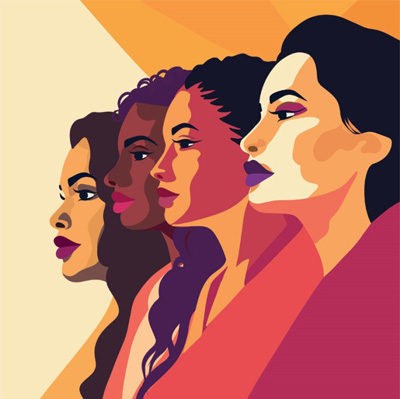
What would the COVID-19 crises have looked like if there had been an equal gender distribution of power and if the U.S. was led by a woman? Some of the countries doing best under the pandemic are run by women. Above, from left to right, New Zealand Prime Minister Jacinda Ardern, Finland Prime Minister Sanna Marin, German Chancellor Angela Merkel and Republic of China President Tsai Ing-Wen.
Remembering Ruth Mandel, A Profound Loss

April 11, 2020 – Professor Ruth B. Mandel, who escaped the Holocaust with her family and devoted her life to promoting democracy and civic engagement, died this morning. Her death at age 81 was caused by ovarian cancer.
“This is very sad news at a difficult time,” said John J. Farmer, Jr., director of the Eagleton Institute of Politics. “The loss of Ruth will be felt not just by Eagleton, by Rutgers, and by The National Holocaust Museum, but by the thousands of students, colleagues, and friends whose lives she has touched in her inimitable, deeply caring way. The community – the family, really – that Ruth built and nurtured here at Eagleton wants nothing more at this moment than to gather to celebrate her life and to mourn. Although the current public health emergency prevents us from meeting in person, I assure you that we will offer opportunities for virtual gathering, and will come together in person on a brighter day to celebrate Ruth’s presence in all of our lives.” Read Full Article
The New York Times‘ obituary for Mandel recognized her lifelong passion and commitment, referring to Mandel as “a voice for women in politics.”
At the time of her death, Mandel was Board of Governors Professor of Politics at Rutgers University-New Brunswick and a Senior Scholar at the Center for American Women and Politics (CAWP), a unit of the University’s Eagleton Institute of Politics. She stepped down in August, 2019 as director of Eagleton after 24 years of distinguished leadership; before that, from 1971-1984, she was a founder and director of CAWP.
An interview with Ruth Mandel from the Institute for Women’s Leadership
This video is part of the Women’s Education and Leadership Digital Collection at Rutgers. The project is a continuation of the work started by the Institute for Women’s Leadership’s 2016 documentary film, From the Boarding House to the Boardroom: 250 Years of Women at Rutgers, commissioned as part of Rutgers University 250th anniversary celebration.
Professor Mandel had an incredible talent for developing innovative research and programs, and for building lasting institutions. At a time when women’s political participation was not considered a topic worth exploring, Ruth founded the Center for American Women and Politics (CAWP), persisting over decades to establish it as the nation’s preeminent source of knowledge on women in politics. She continued her groundbreaking work as Director of the Eagleton Institute of Politics until August, 2019. One of the IWL consortium’s founding directors, Ruth had a deep and personal commitment to capturing women’s leadership experiences in their own words. She shares reflections on her own story in this intriguing interview for the Women’s Education and Leadership Digital Collection at Rutgers.
What to Do About Women in Politics with Ruth Mandel - Youtube video
Remembering Cheryl Wall 1948-2020

Faculty, staff, and students mourn the loss of our beloved colleague Cheryl Wall, Board of Governors Zora Neale Hurston Distinguished Professor of English, who was a leading voice in the field of African-American literature, a generous mentor to so many, and an institution builder at Rutgers and beyond.
Excerpt from announcement by President Robert Barchi:
Mourning Cheryl Wall, Beloved and Brilliant Rutgers Scholar
We are profoundly saddened by the death of this amazing scholar, teacher, and citizen of the University, who had been planning to retire this year. Cheryl Wall represented the very best of Rutgers: a world-class intellect whose scholarship advanced the conversation about African American literature and whose teaching and guidance inspired her students to think in new ways. She arrived here in 1972 after studying at Howard and Harvard universities and immediately had an impact, both in her teaching and in her scholarship.
Over the years, Professor Wall earned every accolade that defines success at this institution, from the Warren I. Susman Award for Excellence in Teaching to the Daniel Gorenstein Memorial Award for scholarly achievement and exceptional service to the University. She cared about everyone—her students, her colleagues, the university, our society—and made us all better. Dr. Wall was a nationally regarded scholar and writer about African-American women writers, with special focus on the author Zora Neale Hurston. She was also the heart and soul of the Rutgers University–New Brunswick English Department, shaping its excellence over the past several decades and ensuring—perhaps more than any other professor—that Rutgers remains preeminent in and committed to the humanities.
Excerpt from announcement by Christopher J. Molloy, Ph.D., Chancellor, Rutgers–New Brunswick:
In Memory of Professor Cheryl Wall
Dr. Wall was an instrumental member of the School of Arts and Sciences Department of English where her contributions have become the essence of the school and our institution. While her intellect, profound teaching excellence and passion for literature made her an exceptional professor, it was her mentorship, guidance, and ongoing dedication to her students, colleagues and Rutgers University that set her apart.
A trailblazer and sustaining force, Dr. Wall drove the establishment of the graduate program in English at the School of Arts and Sciences, empowering students, encouraging a broad scale appreciation of the humanities and providing a path for continued education in literature. An established author of her own, Dr. Wall broke barriers as she illustrated her expertise and scholarship about African American literature and African American women writers in her many nationally and internationally renowned publications.
Dr. Wall inspired us to embrace new ideas, to stand for what we believe in, and above all else – to be kind. I am grateful to have had Dr. Wall as a colleague, and we are all fortunate to have had her as a member of the Rutgers family.
An interview with Cheryl Wall from the Institute for Women’s Leadership
Cheryl Wall is a Board of Governors Zora Neale Hurston Distinguished Professor of English and former Chair of the English Department. Wall is an author and a specialist in Black women’s writing, the Harlem Renaissance, and Zora Neale Hurston. She is a co-chair of the President’s Council on Institutional Diversity and Equity. Joining Douglass in 1972 as an assistant instructor, Wall describes her role in the development of the college and its legacy today. She discusses the intrinsic value of the humanities in the context of a liberal arts education, student activism on campus, and the evolution of the Douglass Woman. This video is part of the Women’s Education and Leadership Digital Collection at Rutgers.
Tribute Video

Rutgers Today article in memory of Cheryl Wall.
Are you interested in Social Justice, Activism, and Human Rights?

Apply to the new WGSS Master’s Track in Feminist Practices for Social Change starting fall 2020!
In one to three years, you will be ready to pursue professional activist work in a social justice and human rights organization immediately upon graduation.
After completing classes focused on social justice and human rights theory and practice, you will complete a Practicum internship to put your academic knowledge to use in your field of interest, for example: UN Women; on campus in units of the IWL, including with the globally-renowned NGO, The Center for Women’s Global Leadership; and in organizations internationally.
This Track offers students many opportunities: • Be a teaching assistant for classes in the WGSS Social Justice Minor • Participate in the bi-annual WGSS graduate student conference • Present at or attend conferences related to activist work or academic research and apply for travel funding • Study abroad in Europe for one semester through the GEMMA Program or in the summer at the European Institute in Kassel, Germany • Complete a variety of Rutgers certificates including through The Center for Violence against Women and Children or the Department of Africana Studies • Apply for graduate fellowships such as The Eagleton Institute for Politics Graduate Fellowship Program
The deadline for applications to the new MA Track is April 15, 2020.
For more information click here or contact: Julie Rajan, Masters Program Director,
This email address is being protected from spambots. You need JavaScript enabled to view it.
Announcing Our Departmental Name Change
A note from the Chair, Dr. Mary Trigg
Dear Members of the WGSS Community,
I am delighted to write with the news that on Tuesday of this week the Board of Governors officially approved the requested name change for our department. We are now the Department of Women's, Gender, and Sexuality Studies! Here is the formal memo about our name change from that meeting:
School of Arts and Sciences states - The name of the Department of Women’s and Gender Studies in the School of Arts and Sciences has changed to the Department of Women’s, Gender, and Sexuality Studies. The updated name more accurately reflects the department’s current curriculum and scholarship, and is consistent with similar departments at peer institutions.
Thank you for your patience in waiting for this change. I wish you all a restful, renewing winter break.
15 Remarkable Moments of the Decade at Rutgers–New Brunswick and RBHS
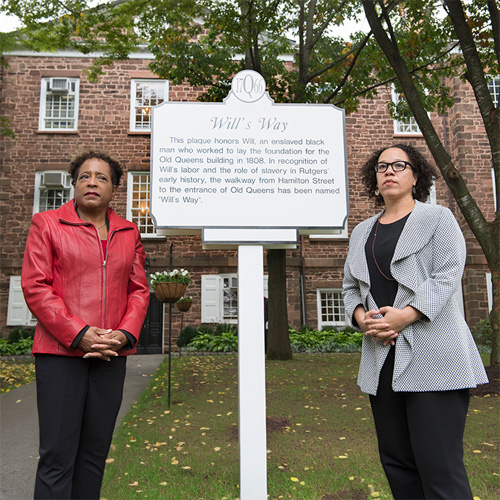
The Department of Women's and Gender Studies would like to congratulate Dr. Deborah Gray White and Dr. Marisa Fuentes for their milestone acknowledgment
15 Remarkable Moments of the Decade at Rutgers–New Brunswick and RBHS
On its 250th anniversary, Rutgers undertook the Scarlet and Black Project, a historical examination of the experiences of African Americans and Native Americans at the university. Scarlet and Black, Volume 1: Slavery and Dispossession in Rutgers History traced the university’s early history, uncovering how it benefited from the slave economy and came to own the land it inhabits. From these findings, the university took action to acknowledge its past, dedicating three major landmarks and pledging to continue to excavate the university’s history with race.
Congratulations Professor Jasbir Puar - 2019 Kessler Award
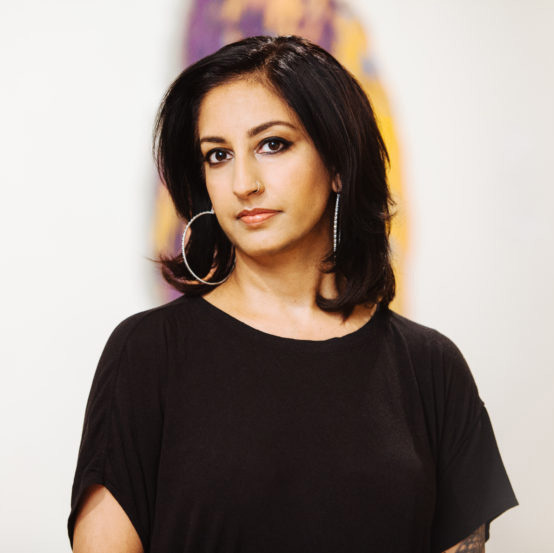
The Department of Women's and Gender Studies would like to congratulate Jasbir Puar on receiving the
2019 KESSLER AWARD
CLAGS, the Center for LGBTQ Studies at CUNY’s Graduate Center, is proud to announce scholar and activist Jasbir Puar as the winner of the 2019 Kessler Award, given every year to a scholar and/or activist who has produced a substantive body of work that has had a significant influence on the field of LGBTQ Studies.
Testimonial Speakers: David Eng, Anjali Arondekar & Jennifer Doyle
As is customary, Dr. Puar is scheduled to speak on A No-State "Solution": Inter/Nationalism and the Question of Queer Theory before accepting the award.
Please join us in honor of Dr. Puar and her work.
Thu, December 5, 2019
6:00 PM – 9:00 PM EST